Inside the kitchen
The handmade process
Five steps from sugar bowl to wax seal — roughly two days per batch, mostly waiting.
Step 1
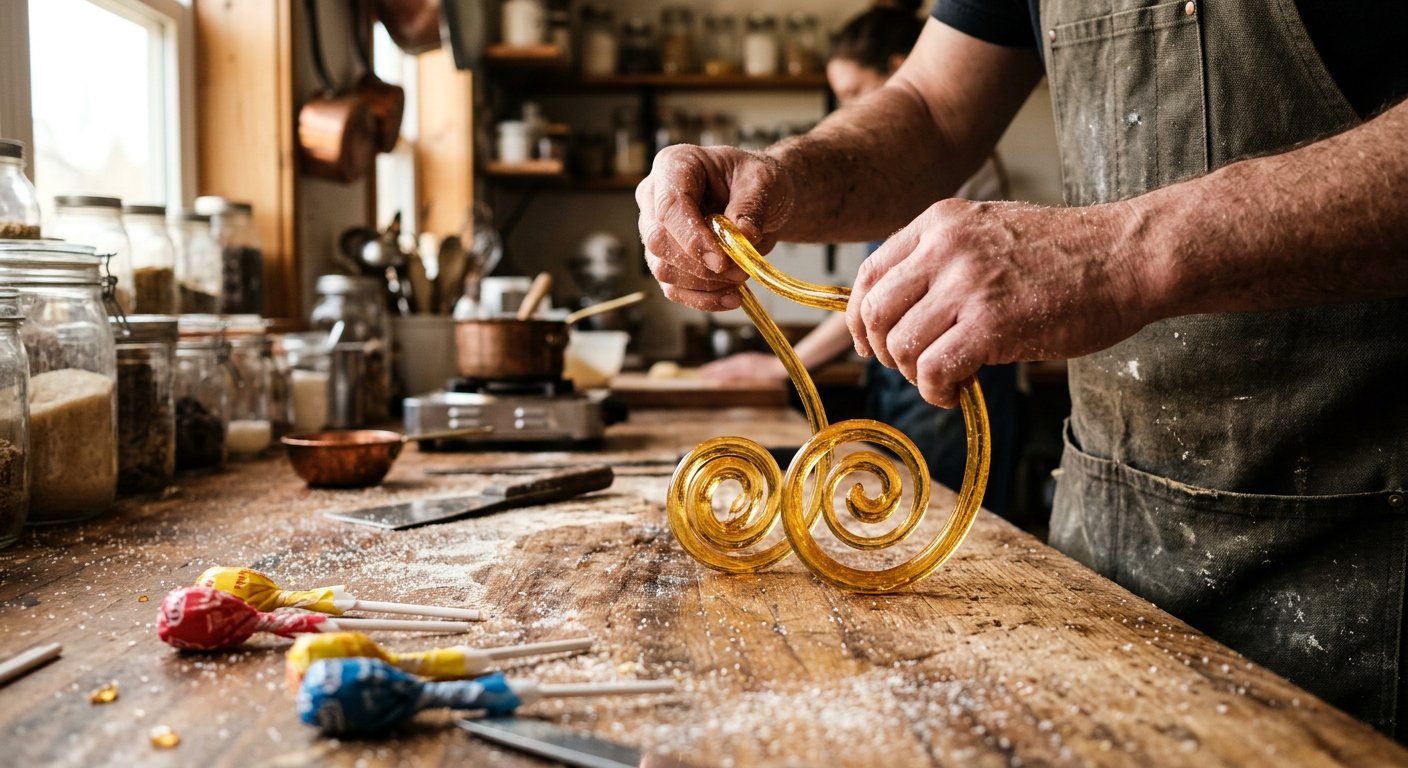
We start with a flavor idea, not a recipe
Every batch begins as a sentence, not a formula: "what does mango taste like with basil in the room?" We test the idea in tiny amounts — three pops, five pops — and argue about them at the kitchen table. If a combination doesn't get one genuine "hmm" from the other person, it goes back to the drawing board.
This is also where The Guessing Game's secret combination gets decided. Twice a month, we lock the door, cook three candidate ribbons, and taste each one blind. The winner goes in the next batch. The losers go in the notebook, with notes about why.
Step 2
Sugar, by the degree
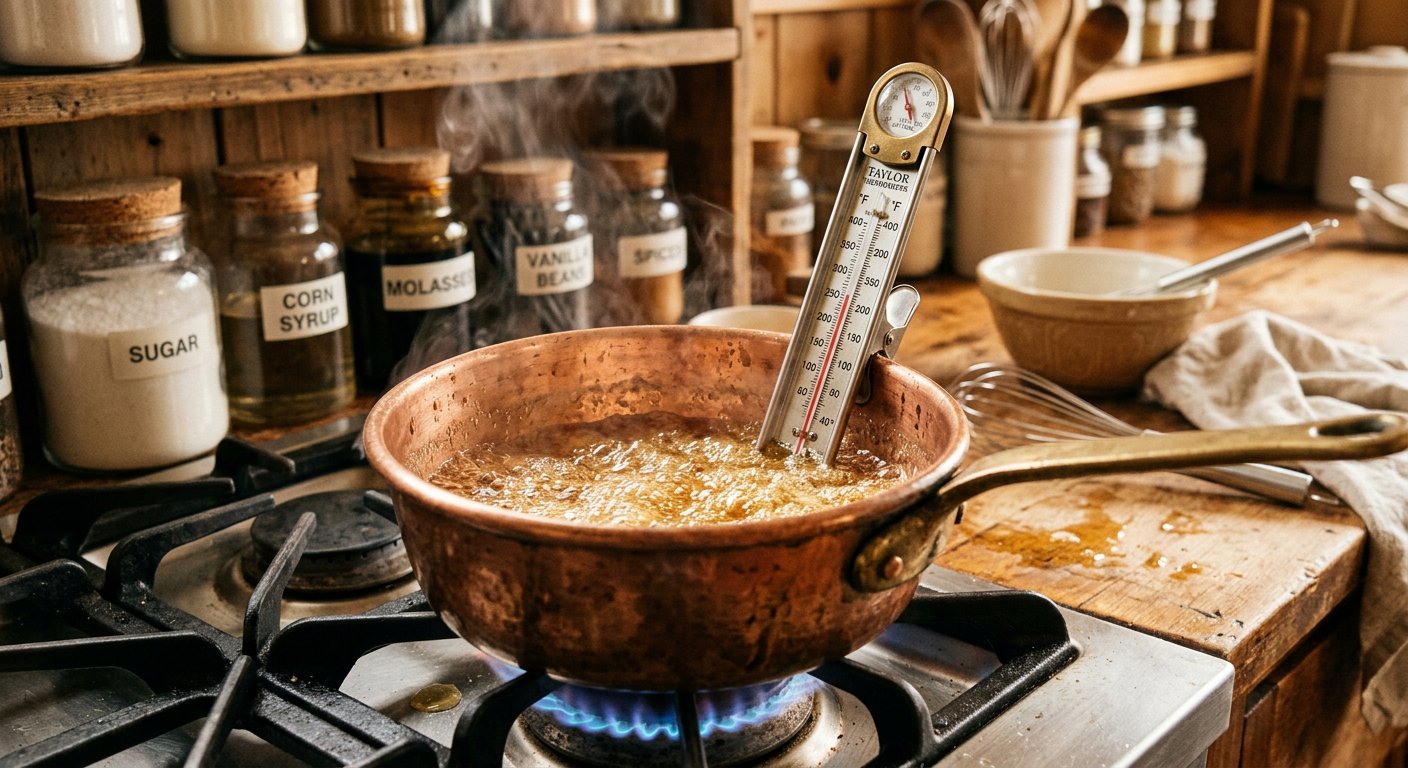
Hard candy is temperature and nothing else. We cook in copper pans over a gas flame — no induction station, no programmable oven — and watch the sugar climb from syrup to soft ball to hard crack. The thermometer is our guide, but the smell tells you the rest: when the kitchen smells like warm toffee instead of like syrup, you're close.
A wrong turn here isn't ruined food, it's ruined hardware: crystallized sugar is a sticky lesson we've learned enough times to respect. That's part of why our batches are small. If one pan goes wrong, we start that part over — not the whole day.
Step 3
Hands, not machines
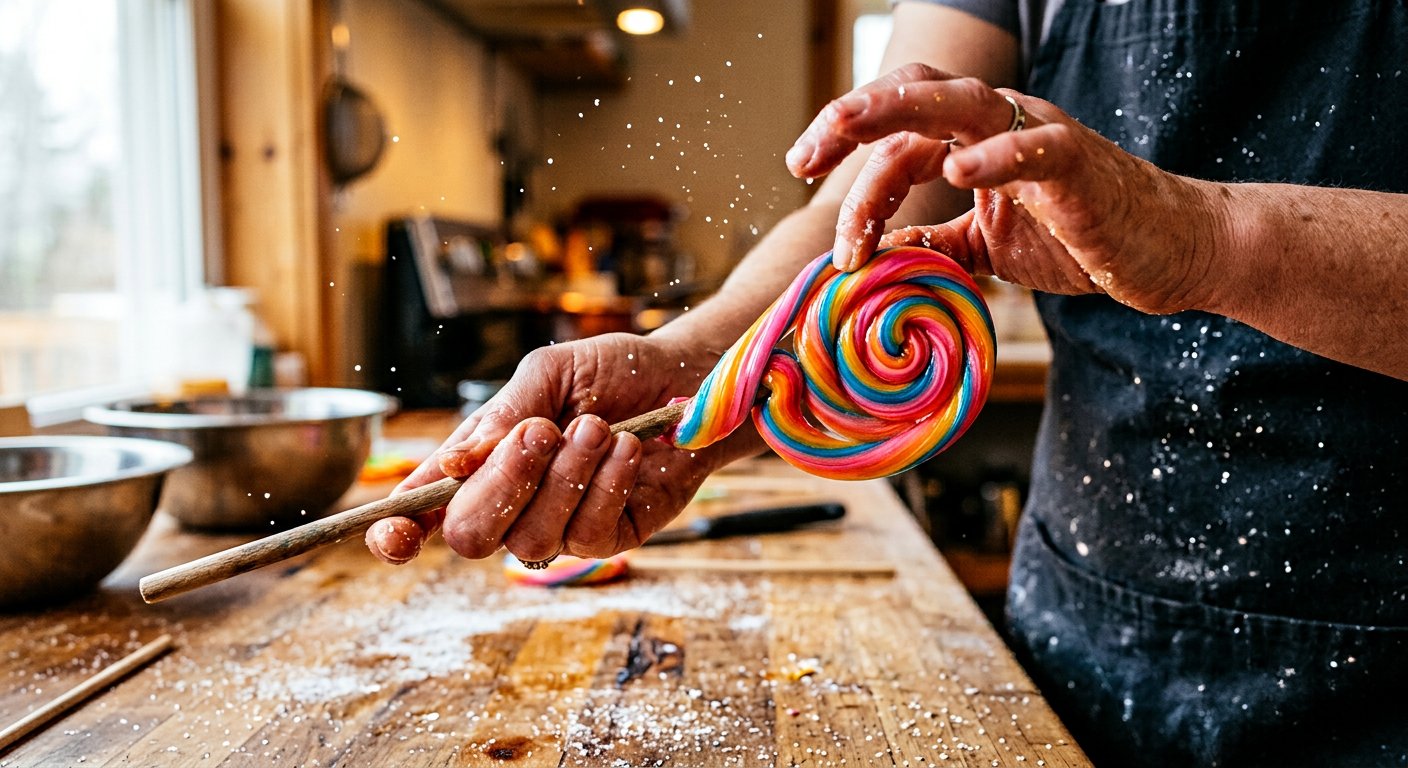
The moment sugar hits the hook, everything is muscle memory and timing. We pull it warm, fold it, pull again, twist onto the stick. A machine would do this in seconds and produce the same swirl on every single pop. We'd rather have forty slightly-different spirals made by hands that know what they're doing.
This is the step where the shapes come from too: the spiral, the geode, the folded ribbon. Same sugar, same kitchen, different hands-on treatment. It's also where most of the day's conversations happen, which is fine — candy and gossip have always made good partners.
Step 4
Painting with color
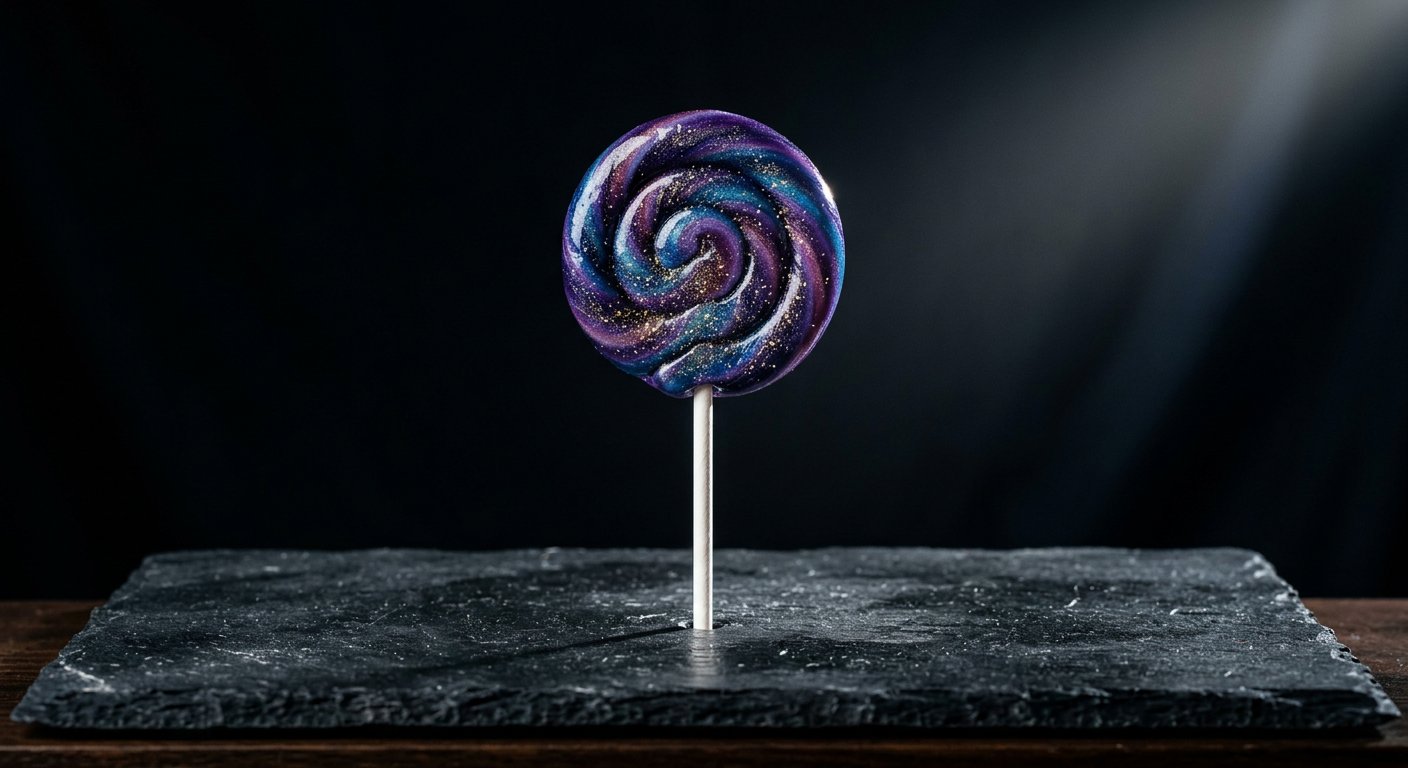
Color is applied with brushes the size of a toothpick, after the base swirl sets. This is where Sunset Splits get their two-tone borders, where Nebula Pops get their indigo shading, and where each piece earns its small, individual differences. If you hold two Sunset Splits up side by side, the transition point is never at the same place twice.
Shimmer dust — the edible kind — goes on last, pressed with a soft brush until the surface looks like it's holding its own light. It's cosmetic, it's edible, and it changes how the flavor feels on the tongue. That last part is the reason it stays on the menu.
Step 5
The rest, the wrap, the batch number
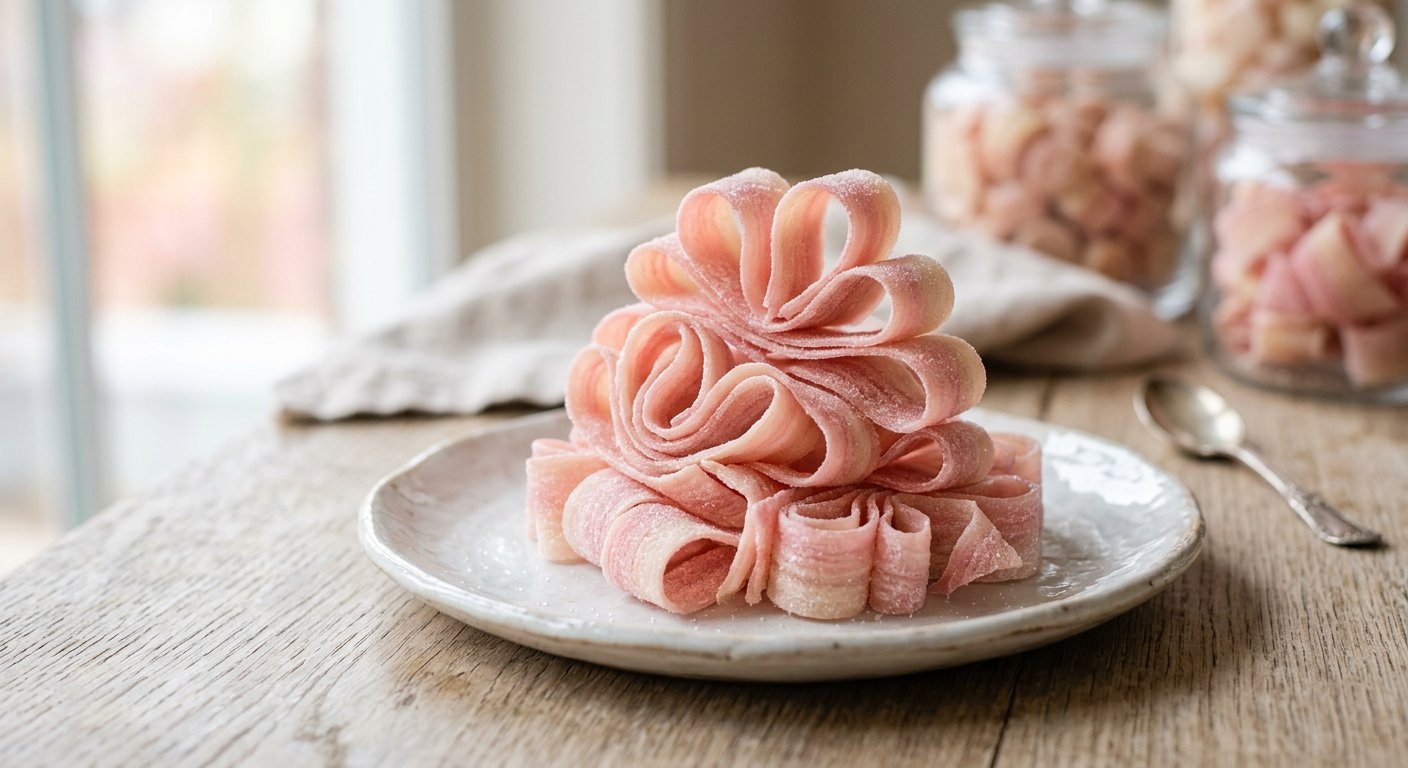
Freshly made candy is eager, not good. Lollipops rest for at least two days so the sugar structure settles and the flavor stops shouting. Caramels rest longer — a week is typical — because that's how they develop the slow-burn chew people associate with the batch.
Then everything gets wrapped by hand, sealed with wax where it applies, packed into jars or boxes, and stamped with a batch number. The number isn't a marketing trick. It means if you come back and say "the one from last month, the thing with the gray," we can actually find it in the notebook.
Why this takes longer than it should
One batch of Nebula Pops: about twenty minutes of cooking, forty minutes of hand-twirling, two days of resting, and half an hour of wrapping. The calendar says two days. The kitchen says two days and a lot of attention.
We know a production line would change those numbers. It would also change the candy. We've done the math, we've had the conversation, and we're still here — small batches, slow days, the occasional sold-out flavor. That trade-off is the whole story.
Want to see a batch in person?
Kitchen visits and pickup appointments are available. Send us a request and we'll set a time that doesn't collide with a pull.
Book a pickup or visit